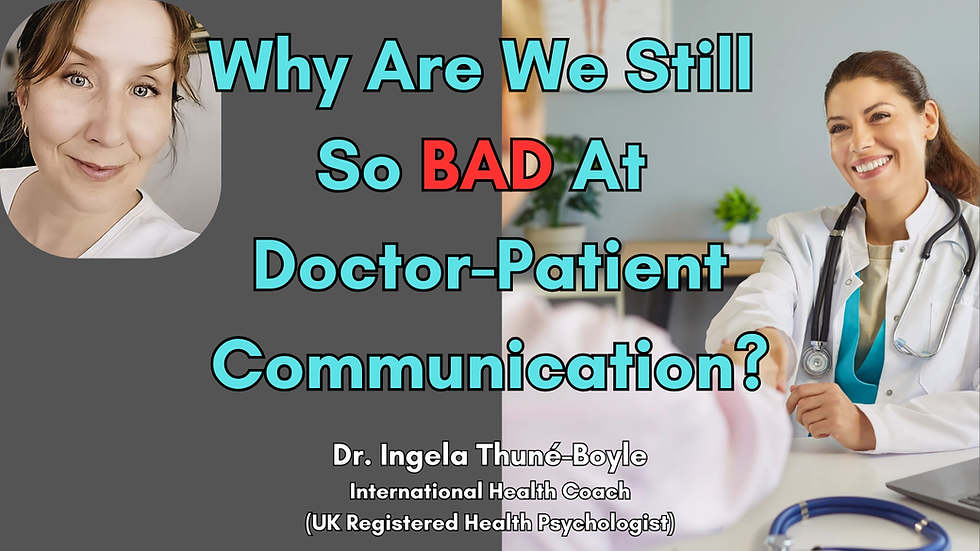
New YouTube Video! Medical Gaslighting: Why It Happens and Why It Matters

In this video, I explore what we mean by “medical gaslighting” and why people can sometimes leave healthcare appointments feeling dismissed, unheard, or even questioning their own experience. When symptoms are persistent, complex, or difficult to explain, being told that tests are normal or that stress may be contributing can leave people wondering whether something has been missed, or whether they are somehow imagining what they are experiencing.
I discuss why medical gaslighting is a complicated term. Most healthcare professionals are genuinely trying to help, but intention and impact aren't always the same. A patient can feel dismissed even when dismissal wasn't intended, and repeated experiences of not feeling heard can have a significant impact. The video explores some of the reasons these experiences can occur, including pressures within healthcare, limited appointment times, cognitive biases, knowledge gaps, and the tendency to become too certain about an explanation too early. I also discuss anchoring, when an initial explanation begins to influence how subsequent symptoms and information are interpreted.
I look at what happens when investigations are normal, and why “we haven't found an explanation” isn't necessarily the same as “there's nothing wrong.” Tests can only measure what they are designed to measure, and unexplained symptoms are not necessarily imagined or insignificant.
The video also explores why psychological and nervous-system explanations need to be communicated carefully. Mind-body conditions are real conditions, and changes in how the brain and nervous system process and respond to information can produce very real physical symptoms. These symptoms are not imagined, exaggerated, or consciously created. The problem arises when a legitimate mind-body explanation is reduced to “it's psychological” or “it's just stress,” rather than explaining how these processes can actually contribute to physical symptoms. Even a valid explanation can feel dismissive if it isn't properly communicated or if the person isn't given a clear understanding of what it means and what they can do about it.
Finally, I talk about the longer-term effects of repeated dismissal. Some people begin questioning themselves, while others become increasingly determined to find an explanation, angry, or mistrustful of healthcare. And sometimes what we see in a consultation isn't the cause of someone's distress, but the consequence of what they have experienced before.
For people living with chronic, complex, or poorly understood symptoms, having their concerns listened to and taken seriously matters, even when the cause isn't yet clear. A diagnosis can be incredibly important, but clinicians don't have to have all the answers before they can acknowledge that someone is struggling, communicate with compassion, and help them think about what comes next. Uncertainty doesn't have to mean dismissal.
Watch the video below. 👇
If you liked this post or know someone who might find it useful, please share. You can also join my mailing list at www.ingelathuneboyle.com for regular blog notifications straight to your inbox! Please check out my other blog posts here.
------------------------------------------------
Dr. Ingela Thuné-Boyle provides specialized online coaching for adults living with chronic illness, chronic pain, persistent physical symptoms, and mind-body syndromes, helping people better understand their symptoms, develop effective self-management skills, and improve their quality of life. She is a Chartered Psychologist and Doctor in Behavioural Medicine with over 25 years of experience in Health Psychology, bringing a strong evidence-based understanding of the psychological, behavioural, and physiological factors that influence health and wellbeing. Learn more about her background [here] and her coaching approach [here].
📩 Contact: For coaching or other enquiries, you can contact her at info@ingelathuneboyle.com.
Please note: Advice given in this blog is not meant to take the place of coaching, therapy or any other professional advice. The opinions and views offered by the author is not intended to treat or diagnose, nor is it intended to replace the treatment and care that you may be receiving from a licensed physician or mental health provider. The author is not responsible for the outcome or results following their information and advice on this blog.