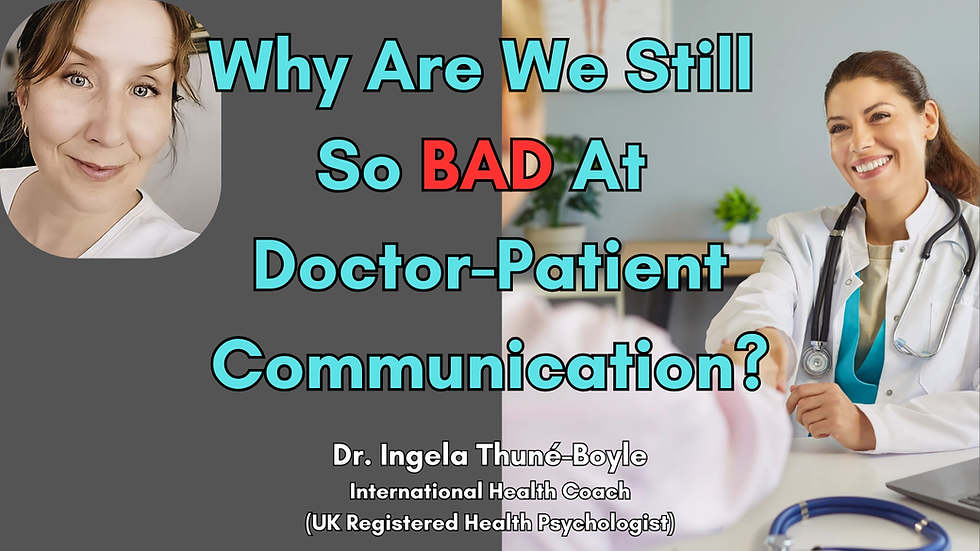
New YouTube Video: Why Doctor–Patient Communication Often Goes Wrong (and why it matters)

In this video, I explore why communication between patients and healthcare professionals can have such a profound impact on the experience of chronic illness and persistent symptoms. For many people, one of the most difficult aspects of living with a long-term condition is not only the symptoms themselves, but the challenge of trying to explain them, make sense of them, and feel heard within the healthcare system.
I discuss why communication can sometimes break down, particularly when symptoms do not fit neatly into traditional medical explanations centred on disease, injury, or tissue damage. We look at the pressures facing modern healthcare, the uncertainty that often surrounds complex conditions such as chronic pain, central sensitization, and neuroplastic symptoms, and how these factors can affect both patients and clinicians during consultations.
The video also explores the emotional impact of difficult healthcare experiences. Feeling dismissed, misunderstood, or left without answers can affect trust, increase healthcare-related anxiety, and leave people feeling isolated or uncertain about their own experiences. I also discuss the concept of medical gaslighting and why repeated experiences of feeling unheard, disbelieved, or having symptoms minimised can have a profound impact on a person's wellbeing, their willingness to seek healthcare, and their trust in the healthcare system.
Finally, I explain why compassionate, collaborative communication is far more than simply good bedside manner. Feeling listened to, respected, and taken seriously can influence trust, the sense of safety, and even how people experience and cope with ongoing symptoms. Small moments of empathy and honest communication can make a significant difference, even when clear answers are not yet available.
Whether you are living with chronic illness, chronic pain, or persistent symptoms, supporting someone who is, or working as a healthcare professional, I hope this video offers a balanced and compassionate perspective on an issue that lies at the heart of good healthcare.
On a lighter note, my allergies did a number on me while filming this one, so if I look or sound like a zombie, that's why! 🤧 I almost considered waiting until I felt better to record it, but I often encourage my clients to be mindful of perfectionism and not wait for the "perfect" moment before doing something important. So, I decided to take my own advice and post the video anyway.
Watch the video below. 👇
If you liked this post or know someone who might find it useful, please share. You can also join my mailing list at www.ingelathuneboyle.com for regular blog notifications straight to your inbox! Please check out my other blog posts here.
------------------------------------------------
Dr. Ingela Thuné-Boyle is a licensed Practitioner Health Psychologist and a Doctor in Behavioural Medicine who specializes in improving the quality of life of people struggling with long-term health problems, chronic pain and trauma. She runs a private online (telehealth) practice at www.ingelathuneboyle.com. You can find out more about her background [here], and more about her approach to therapy [here].
📩 Contact: For therapy or other enquiries, you can contact her at info@ingelathuneboyle.com.
Please note: Advice given in this blog is not meant to take the place of therapy or any other professional advice. The opinions and views offered by the author is not intended to treat or diagnose, nor is it intended to replace the treatment and care that you may be receiving from a licensed physician or mental health provider. The author is not responsible for the outcome or results following their information and advice on this blog.