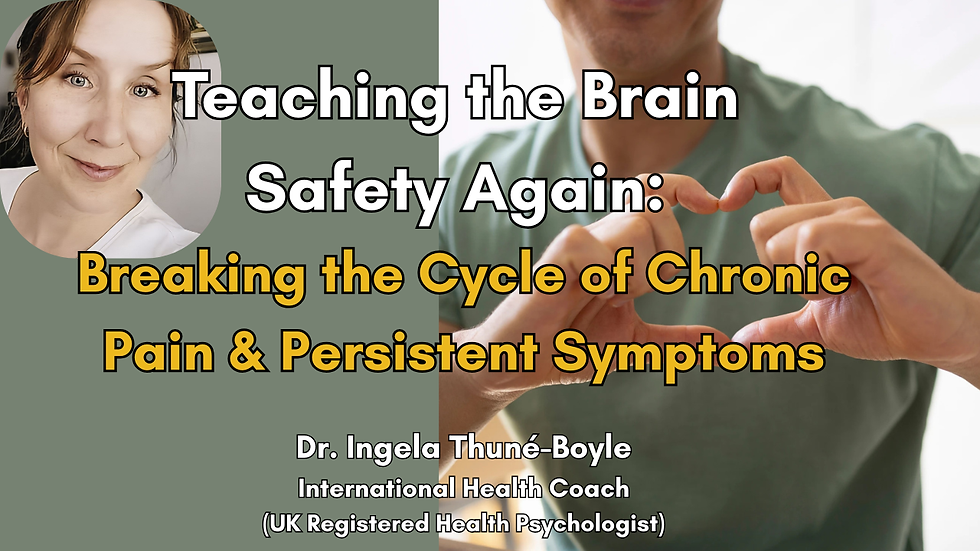
New YouTube Video: Chronic pain isn’t always about damage: what’s really going on

In this video, I explore what chronic pain is and why persistent pain cannot always be explained by ongoing injury or tissue damage alone. Many people are told that if pain persists, there must be something structurally wrong with their body. However, research over the past few decades has shown that chronic pain is often far more complex, involving changes in the nervous system, pain processing, and the way the brain interprets signals from the body.
In this video, I discuss the difference between acute and chronic pain, the role of the nervous system, and why understanding the science of pain can be an important step toward recovery and improved quality of life. I hope you find it helpful.
If you enjoy the video, please consider subscribing to the channel as I will be sharing regular content on chronic pain, chronic illness, mind-body syndromes, medical trauma, doctor-patient communication, and related topics. (And bare with me while I get the hang of actually making videos! :-D )
If you liked this post or know someone who might find it useful, please share. You can also join my mailing list at www.ingelathuneboyle.com for regular blog notifications straight to your inbox! Please check out my other blog posts here.
------------------------------------------------
Dr. Ingela Thuné-Boyle is a licensed Practitioner Health Psychologist and a Doctor in Behavioural Medicine who specializes in improving the quality of life of people struggling with long-term health problems, chronic pain and trauma. She runs a private online (telehealth) practice at www.ingelathuneboyle.com. You can find out more about her background [here], and more about her approach to therapy [here].
📩 Contact: For therapy or other enquiries, you can contact her at info@ingelathuneboyle.com.
Please note: Advice given in this blog is not meant to take the place of therapy or any other professional advice. The opinions and views offered by the author is not intended to treat or diagnose, nor is it intended to replace the treatment and care that you may be receiving from a licensed physician or mental health provider. The author is not responsible for the outcome or results following their information and advice on this blog.